تاریخی مقامات
Fort Henry: Kingston’s Giant Limestone Fortress That Never Fought a Battle
24 نومبر 2026 کو اپ ڈیٹ کیا گیا · جگہیں: 3
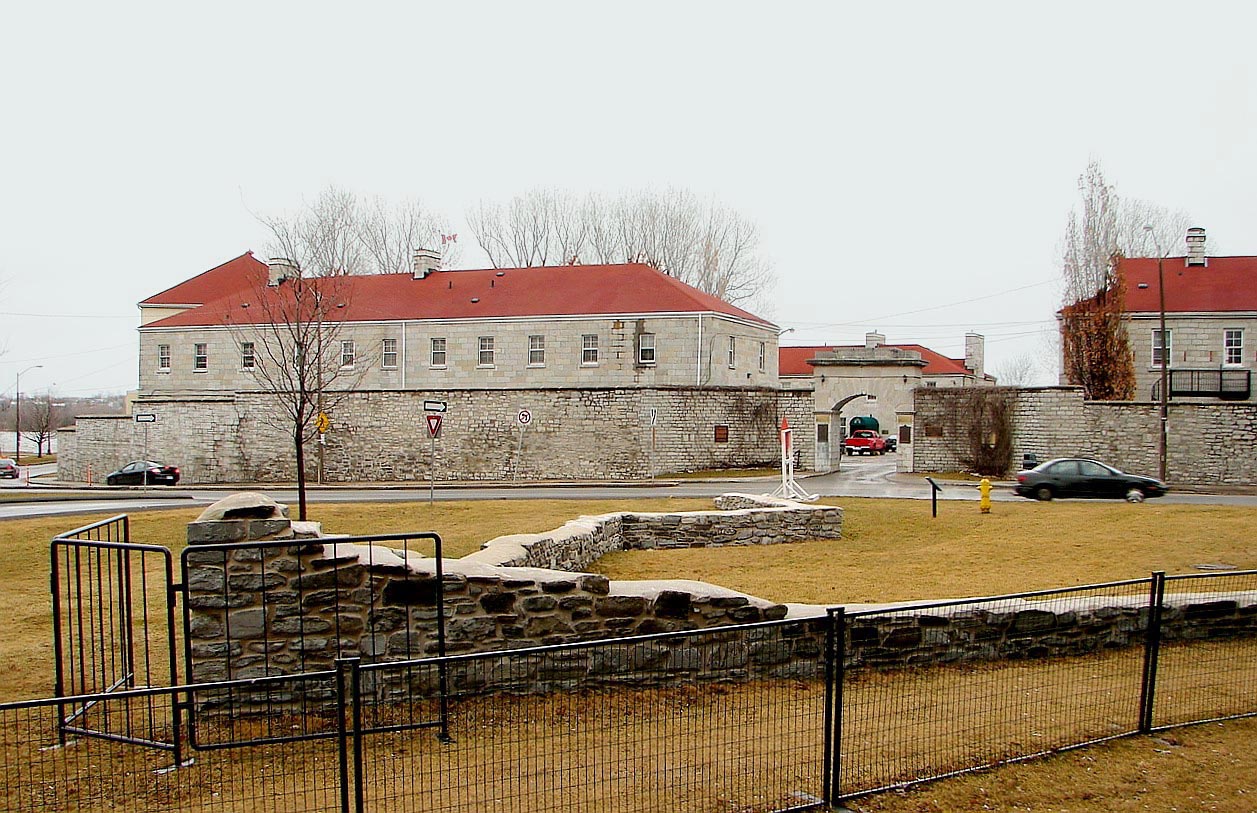
Cannons, redcoats, a goat mascot and a fort that spent two centuries waiting for an invasion that never came. Here’s how to do Fort Henry right.
If you only visit one historic site in Kingston, make it Fort Henry. It sits on top of Point Henry like a limestone crown, staring down the spot where Lake Ontario turns into the St. Lawrence River, with a view so good you’ll briefly forgive the British Empire for everything. Briefly.
It’s also, technically, one of the most successful military buildings in Canadian history. In nearly two hundred years, nobody ever attacked it. Not once. Whether that’s because it was terrifyingly well designed or because nobody wanted to climb that hill is a question historians will be debating forever. (It was the design. Probably.)
A fort built for a war that never showed up
Kingston didn’t get a fortress because it looked nice on a postcard. During the War of 1812, this was where the British built and parked their Lake Ontario fleet, at the Royal Naval Dockyard on Point Frederick, the spot now occupied by the Royal Military College. Local militia threw up a blockhouse and gun battery on Point Henry to protect it, and in November 1812 those guns helped chase off American warships that had followed HMS Royal George into the harbour. That was about as exciting as things ever got up here.
After the war, nobody on either side of the border fully trusted the other. So Britain built the Rideau Canal, finished in 1832, as a back-door supply route from Montreal to Kingston that stayed well away from the American shoreline. A canal that important needed a serious guard at its southern end, and the little 1812 fort wasn’t going to cut it.
Enter the fort you see today, built between 1832 and 1836 for over £70,000, which in 1830s money was a truly outrageous sum. It was big, it was stone, and it was nicknamed the “Citadel of Upper Canada,” which is the kind of title a building only earns by trying very hard. Over the next few years a ring of smaller forts and Martello towers went up around the harbour to back it up.
And then… nothing happened. Relations with the United States slowly calmed down, British troops packed up in 1870, and the Canadian militia hung around until 1891 before leaving too. The citadel spent the next few decades quietly crumbling.
The fort’s surprisingly busy retirement
Being unattacked doesn’t mean being unused. Over the years Fort Henry held prisoners from the Rebellions of 1837–38, and during the First World War it was an internment camp. That chapter isn’t a proud one: many of the people held here were Ukrainian immigrants labelled “enemy aliens” simply because of where they came from.
In the Second World War it became Camp 31, a prisoner-of-war camp for captured German air force and navy personnel. On August 26, 1943, nineteen prisoners escaped through an unused privy and out a sewer pipe beyond the walls. Yes, through the toilet. Nobody even noticed they were gone until the Kingston police called to mention they’d spotted a prisoner wandering around Navy Bay. Not the fort’s finest hour, though you have to admire the commitment.
How a Depression project brought it back
By the 1930s the fort was a ruin, and Canada was deep in the Great Depression. The solution was a government work program to restore it, with historian Ronald L. Way leading the job. “Old Fort Henry” reopened on August 1, 1938, and the same year saw the founding of the Fort Henry Guard, the scarlet-coated interpreters who’ve been marching, drilling and firing things ever since.
Today the fort is owned by Parks Canada and run by the St. Lawrence Parks Commission. In 2007 it got a serious promotion, too: it’s part of the Rideau Canal UNESCO World Heritage Site, which puts it in the same club as the Great Wall and the Taj Mahal. Not bad for a building that never saw a fight.
What you’ll actually do there
Walk across the drawbridge and through the gates, and it’s 1867. That’s the year the Fort Henry Guard portrays: Canada’s Confederation year, when the fort was still a British Army garrison. The Guard are mostly students on a summer job, which makes their precision even more impressive. Most of us couldn’t keep a houseplant alive at nineteen, let alone a muzzle-loading cannon.
- The drills and the guns. Infantry drills, fife and drum music, musket demonstrations and the daily artillery demonstration. The cannons are real, and they are loud. Very loud. That’s the point.
- Life behind the walls. Wander through the restored barracks, officers’ quarters, kitchens and the schoolroom to see how soldiers, and the wives and children who lived alongside them, got through a Kingston winter in a stone box.
- David the goat. The Guard’s mascot is a goat named David, after the patron saint of Wales, and there’s been a long line of them. He has been doing this longer than you. Be nice.
- The Sunset Ceremony. On select summer evenings the Guard puts on the big show: marching manoeuvres, rifle drill, music, cannon fire and a fireworks finale over the water. It’s the fort’s most famous event, and it sells out, so book ahead.
- Fort Fright. In October the fort swaps the history lesson for a haunted Halloween event on select nights. Two centuries of “nothing happened here” makes a surprisingly good setting for something finally happening.
Tips before you go
- It’s a summer place. The main season runs from spring through early September, with special events like the Sunset Ceremony and Fort Fright outside regular hours. Check the official Fort Henry site for this year’s dates and prices before you go, because they change every season.
- Wear real shoes. The parade square and ramparts are cobblestone and gravel, and you’ll be climbing stairs. Fashion sandals will regret their life choices.
- Bring ear protection for little ones. Did we mention the cannons are loud?
- Go up top. The ramparts have the best view in town: downtown Kingston, Royal Military College across Navy Bay, and the islands heading off toward the Thousand Islands.
- Parking is free, and so is the view from the hill. There’s food inside the fort if the redcoats make you hungry, or head back downtown for lunch afterwards.
Make a day of it
Fort Henry is operated by the same folks who run Kingston Pen Tours, so you can spend the morning in a fort built to keep invaders out and the afternoon in a penitentiary built to keep people in. Very on-brand for Kingston. Downtown, Murney Tower is one of the Martello towers built to back the fort up. It’s much smaller, but it’s the same story told from a stubbier angle.
-
تاریخی مقامات 19th-century British fortress overlooking the harbour, part of the Rideau Canal UNESCO World Heritage Site, with guided tours and the Fort Henry Guard.
Fort Henry National Historic Site
The fort itself. Free parking on site.
-
گھومنے کی جگہیں Local attraction, tour operator, or recreational venue offering sightseeing, cultural, and entertainment experiences.
Kingston Pen Tours
Same operator, across town. Pair them for a full day of things built to keep people in (or out).
-
گھومنے کی جگہیں Local attraction, tour operator, or recreational venue offering sightseeing, cultural, and entertainment experiences.
Murney Tower Museum National Historic Site of Canada
One of the Martello towers built to back the fort up. Small, round, and very proud of itself.